Coronavirus: Symptoms


Call your doctor:  
If you think you have been exposed to COVID-19 and develop a fever and symptoms, such as cough or difficulty breathing, call your healthcare provider for medical advice.

Watch for symptoms

Reported illnesses have ranged from mild symptoms to severe illness and death for confirmed coronavirus disease 2019 (COVID-19) cases.

The following symptoms may appear 2-14 days after exposure.*

  • Fever
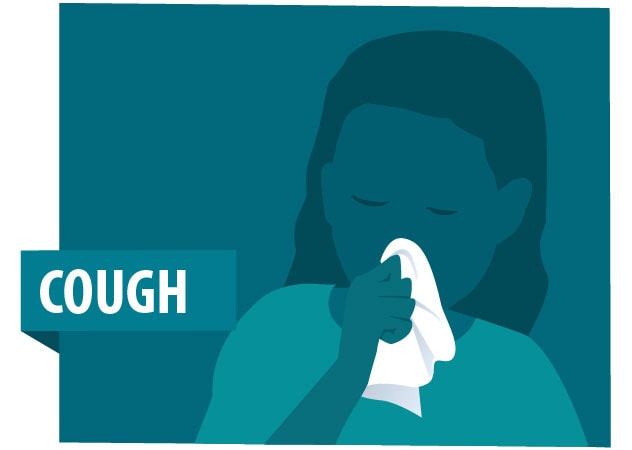
  • Cough
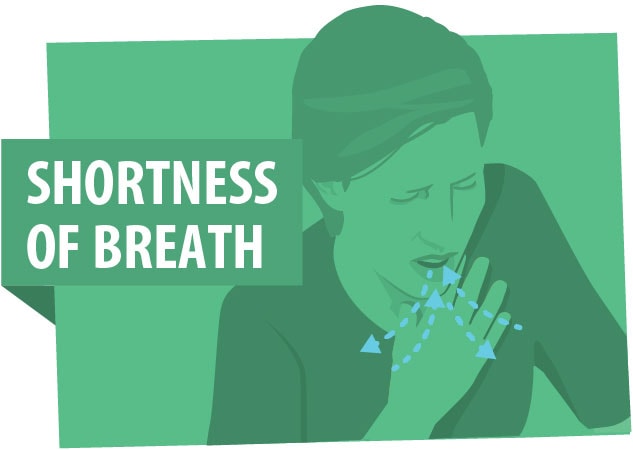
  • Shortness of breath

*This is based on what has been seen previously as the incubation period of MERS-CoV viruses.

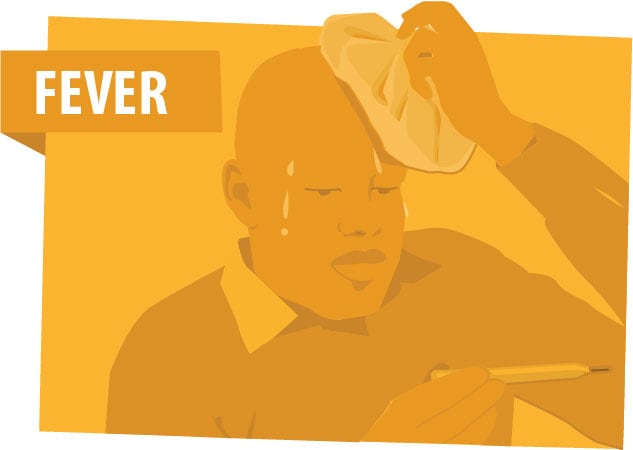
Symptoms fever.
Symptoms cough.
symptoms shortness of breath

alert icon

If you develop emergency warning signs for COVID-19 get medical attention immediately. Emergency warning signs include*:

  • Difficulty breathing or shortness of breath
  • Persistent pain or pressure in the chest
  • New confusion or inability to arouse
  • Bluish lips or face

*This list is not all inclusive. Please consult your medical provider for any other symptoms that are severe or concerning.

Coronavirus: How to Protect Yourself

Know How it Spreads

Illustration: woman sneezing on man
  • There is currently no vaccine to prevent coronavirus disease 2019 (COVID-19).
  • The best way to prevent illness is to avoid being exposed to this virus.
  • The virus is thought to spread mainly from person-to-person.
    • Between people who are in close contact with one another (within about 6 feet).
    • Through respiratory droplets produced when an infected person coughs or sneezes.
  • These droplets can land in the mouths or noses of people who are nearby or possibly be inhaled into the lungs.

Take steps to protect yourself

Illustration: washing hands with soap and water

Clean your hands often

  • Wash your hands often with soap and water for at least 20 seconds especially after you have been in a public place, or after blowing your nose, coughing, or sneezing.
  • If soap and water are not readily available, use a hand sanitizer that contains at least 60% alcohol. Cover all surfaces of your hands and rub them together until they feel dry.
  • Avoid touching your eyes, nose, and mouth with unwashed hands.
Illustration: Woman quarantined to her home

Avoid close contact

Take steps to protect others

man in bed

Stay home if you’re sick

woman covering their mouth when coughing

Cover coughs and sneezes

  • Cover your mouth and nose with a tissue when you cough or sneeze or use the inside of your elbow.
  • Throw used tissues in the trash.
  • Immediately wash your hands with soap and water for at least 20 seconds. If soap and water are not readily available, clean your hands with a hand sanitizer that contains at least 60% alcohol.
man wearing a mask

Wear a facemask if you are sick

  • If you are sick: You should wear a facemask when you are around other people (e.g., sharing a room or vehicle) and before you enter a healthcare provider’s office. If you are not able to wear a facemask (for example, because it causes trouble breathing), then you should do your best to cover your coughs and sneezes, and people who are caring for you should wear a facemask if they enter your room. Learn what to do if you are sick.
  • If you are NOT sick: You do not need to wear a facemask unless you are caring for someone who is sick (and they are not able to wear a facemask). Facemasks may be in short supply and they should be saved for caregivers.
cleaning a counter

Clean and disinfect

  • Clean AND disinfect frequently touched surfaces daily. This includes tables, doorknobs, light switches, countertops, handles, desks, phones, keyboards, toilets, faucets, and sinks.
  • If surfaces are dirty, clean them: Use detergent or soap and water prior to disinfection.

To disinfect:
Most common EPA-registered household disinfectants will work. Use disinfectants appropriate for the surface.

Options include:

  • Diluting your household bleach.
    To make a bleach solution, mix:
    • 5 tablespoons (1/3rd cup) bleach per gallon of water
      OR
    • 4 teaspoons bleach per quart of water
    Follow manufacturer’s instructions for application and proper ventilation. Check to ensure the product is not past its expiration date. Never mix household bleach with ammonia or any other cleanser. Unexpired household bleach will be effective against coronaviruses when properly diluted.
  • Alcohol solutions.
    Ensure solution has at least 70% alcohol.
  • Other common EPA-registered household disinfectants.
    Products with EPA-approved emerging viral pathogens pdf icon[7 pages]external icon claims are expected to be effective against COVID-19 based on data for harder to kill viruses. Follow the manufacturer’s instructions for all cleaning and disinfection products (e.g., concentration, application method and contact time, etc.).

Complete disinfection guidance

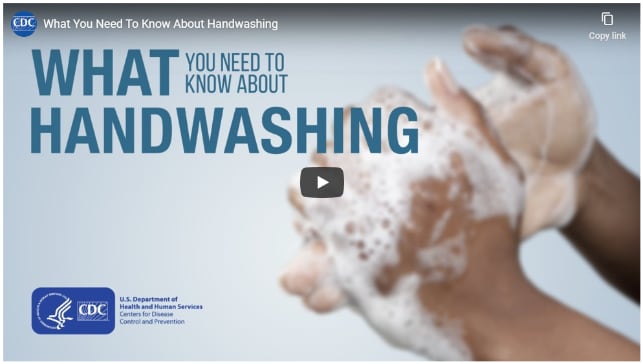
What you need to know about handwashing link with image of soapy handwashing

CDC Releases Interim Coding Guidance for Coronavirus

CDC Releases Interim Coding Guidance for Coronavirus

By Matt Schlossberg

The Centers for Disease Control and Prevention’s National Center for Health Statistics (CDC/NCHS) will implement a new diagnosis code for reporting the 2019 novel coronavirus (COVID-19) effective with the next ICD-10-CM update on October 1. The CDC has released interim coding guidance to be used in conjunction with the current ICD-10-CM classification and the most recent ICD-10-CM Official Guidelines for Coding and Reporting.

According to the document, the guidance is “intended to provide information on the coding of encounters related to coronavirus. Other codes for conditions unrelated to coronavirus may be required to fully code these scenarios in accordance with the ICD-10-CM Official Guidelines for Coding and Reporting.”

Coding scenarios covered in the guidance include:

  • Pneumonia case confirmed as due to COVID-19
  • Acute bronchitis confirmed as due to COVID-19
  • A case with COVID-19 documented as being associated with a lower respiratory infection, not otherwise specified or an acute respiratory infection, not otherwise specified
  • Acute respiratory distress syndrome developed in conjunction with the COVID-19
  • Cases where there is a concern about a possible exposure to COVID-19, but this is ruled out after evaluation
  • Cases where there is actual exposure to someone who is confirmed to have COVID-19

The guidance document also discusses some of the signs and symptoms associated with the virus.

“AHIMA will continue to monitor new information as it becomes available to ensure that health information management professionals have the guidance and tools necessary to respond effectively to potential outbreaks in the United States with accurate coding and reporting of patients with the disease or who have been tested for the disease,” said Sue Bowman, AHIMA’s senior director of coding policy and compliance.

COVID-19 was first identified last year in Wuhan, Hubei Province, China. It has since spread to several countries in Asia, Europe, and North America. Confirmed COVID-19 infections can cause “a range of illness, from little to no symptoms, to those affected being severely ill or even dying,” according to the guidance document. Symptoms can include fever, cough, and shortness of breath. Symptoms may appear from two to 14 days after exposure, based on the incubation period for other coronaviruses, such as the MERS (Middle East Respiratory Syndrome) viruses.

As of this week, more than 79,000 cases of COVID-19 have been confirmed in 29 countries. A recent report published by China’s CDC on the first 72,314 patients with confirmed or suspected COVID-19 in mainland China found an overall case fatality rate of 2.3 percent—less deadly than SARS but more deadly than the seasonal flu. These numbers may likely drop as more undetected or mild cases are identified, according to Vox. Though the majority of cases are in China, a recent surge in confirmed cases in Italy and South Korea have sparked concerns that this is the beginning of a pandemic.

Additional Resources:

  • CDC announcement regarding the new code.
  • Johns Hopkins University has created an interactive web-based dashboard to visualize and track reported cases of the coronavirus in real time.
  • The Regenstrief Institute is creating a series of LOINC codes to identify the lab tests used to screen patients for the virus. The team also created codes during the Zika and SARS outbreaks.
  • Bulletin from the Department of Health and Human Services’ Office for Civil Rights regarding HIPAA compliance during the Covid-19 outbreak.

Matt Schlossberg is editor at the Journal of AHIMA.Tags codinghealth data

“Medical Coding Quizzes” App

Finally! A Comprehensive Study Guide For Medical Coding Students.

Medical Technical Institute2 Introduces New Mobile App Aimed at
Helping Medical Coding Students

New Orleans, LA – Medical Technical Institute2 is excited to announce the launch of a new mobile-based application aimed at helping medical coding students prepare and study for the CPC exam.

The application is available NOW for Apple IOS and Android mobile operating systems and will feature up-to-date study guides, course materials and test-taking tips. Students seeking certifications in the Medical Coding industry will be able to access a variety of exam information through an easy-to-use and organized interface. Access will be made available through a no-contract subscription service starting at $39.99 per month.

More information about the application can be found at http://www.mti2edu.org.

Medical Technical Institute2 is medical coding educational resource company established in 2018. Our primary focus is to be a conduit to those seeking to flourish in careers in the medical coding industry.

https://drive.google.com/file/d/0B3VEJDqkH8Q3NVdaY1FsVlltZTRKZU5pbGJINnd6eHpUbmhn/view?usp=sharing

E/M prep: Your in-house practice checklist for 2021 transition

New Medicare office-visit coding guidelines are simpler and more flexible, but physician practices will need to prepare to get the full benefit of the burden relief the changes are designed to bring. Learn more about what you should be doing within your practice to make a smooth transition.

The revised coding guidelines for outpatient evaluation and management (E/M) services represent the first major overhaul of E/M reporting in more than 25 years. They also have significant potential to give doctors more time to spend with patients by freeing them from clinically irrelevant administrative burdens that led to time-wasting note bloat and box checking.

These changes include:

  • Eliminating history and physical exam as elements for code selection.
  • Allowing physicians to choose whether their documentation is based on medical decision-making (MDM) or total time.
  • Modifying MDM criteria to move away from simply adding up tasks to focus on tasks that affect the management of a patient’s condition.

While administrative burdens are reduced, practices still need to get ready for when the revisions take effect Jan. 1, 2021. The AMA has a checklist and other resources to help implement the operational, infrastructure and workflow changes that will allow practices to more readily—as CMS would say—put patients before paperwork.

The AMA offers tools and resources to help practices transition to the new reporting guidelines.

These include an AMA Ed Hub™ module, “Office Evaluation and Management (E/M) CPT Code Revisions,” which will help physicians and practice staff understand how these foundational changes will impact their work, a detailed description of the code and guideline changes, and a table illustrating revisions related to MDM documentation.

Three activities that a practice may immediately initiate include the following.

Identify a project lead. The transition will require staff education, review of internal policies and procedures, and careful financial tracking. Picking the right person to ensure that all components of the transition are executed in a timely manner is critical. An AMA STEPS Forward™ module on organizational leadership and change management provides advice.

Schedule team preparation time. The best way to educate your practice about these upcoming changes will be to walk through them with the practice’s physicians, other clinical staff and administrative personnel. Schedule time for in-person gatherings to review the changes and address questions that arise. An AMA STEPS Forward module outlines how to run an efficient and productive team meeting.

Update practice protocols. It is important that practice procedures and protocols are updated to be consistent with the new guidelines. The AMA recommends leveraging your practice’s established coding resources and expertise early in the update process.

Related Coverage

6 new digital health CPT codes that you should know about

The revised guidelines were developed by a workgroup assembled by the AMA representing its Current Procedural Terminology (CPT®) Editorial Panel and the AMA/Specialty Society RVS Update Committee (RUC). Last summer and fall, the group built consensus through group calls with some 300 people on the line, surveying those participants, and then using the results to form an agenda for the next call.

The workgroup was led by Barbara Levy, MD, a former RUC chair, and Peter Hollmann, MD, former chair of the CPT Editorial Panel.

“I think it will take a little while to get used to—but not very long, because this will be far more intuitive for physicians,” Dr. Levy said. “For doctors, it’s going to be terrific.”

She explained that the new documentation will be based on the traditional SOAP—subjective, objective, assessment and plan—in which physicians would document what the patient was there for (subjective), what was learned from their history and exam (objective), and then what the physician assessed to be the problem, and the plan for dealing with it.

“That’s the way our brains work,” Dr. Levy said. “We’re getting to the place where we’re documenting what’s important for patient care and for communication with our colleagues.”

Dr. Hollmann agreed.

“Mostly what physicians will be doing is undoing certain ingrained habits for documentation that were created by the CMS documentation guidelines,” he said. “At some point, they’ll be saying ‘Why am I still doing this?’”

Andis Robeznieks

Senior News Writer

American Medical Association

E/M prep: Avoid these pitfalls in move to new office-visit codes

New Medicare office-visit coding guidelines take effect Jan. 1, 2021, and are designed to be more intuitive and make unnecessary documentation tasks go away. Experts believe the transition will be smooth, especially if practices prepare in advance and avoid some clearly identified pitfalls.

CPT Code Revision Updates

The AMA’s work on streamlining documentation and reducing note bloat is far from over. Subscribe now to stay in the loop on continued CPT reform. 

Subscribe for Updates

The new evaluation and management (E/M) office visit code-selection criteria remove complex counting systems for history, exam and data that sometimes varied by payer. Physicians can decide whether to code by the total time—including nonpatient-facing activities on the day of service—or medical decision-making related to the visit.

In addition, ambiguous terms, such as “mild” were removed and previously ambiguous concepts—such as “acute or chronic illness with systemic symptoms”—were clearly defined.

Preparation will be key for a smooth transition and the AMA provides advice on how to do it. An AMA Ed Hub™ module, “Office Evaluation and Management (E/M) CPT Code Revisions,” will help practices understand how these foundational changes will affect their work.

The AMA also has a detailed description of the changes and a table illustrating revisions related to medical decision-making documentation.

Recently released by the Centers for Medicare & Medicaid Services, the new coding for office-based E/M codes mostly follows the recommendations of an AMA-convened workgroup representing its Current Procedural Terminology (CPT®) Editorial Panel and the AMA/Specialty Society RVS Update Committee (RUC). The workgroup was led by Barbara Levy, MD, a former RUC chair, and Peter Hollmann, MD, former chair of the CPT Editorial Panel.

Related Coverage

E/M prep: Your in-house practice checklist for 2021 transition

The workgroup co-chairs and an AMA preparation checklist highlight the following as mistakes to avoid when implementing the code revisions.

Forgetting to check the calendar. “One of the most important things to remember is that it’s for 2021,” said Dr. Hollmann, perhaps only half joking. “I just want to make sure that nobody thinks the rules suddenly change effective Jan. 1 of next year.”

Failing to appreciate the impact. The other key he noted illustrates how a small adjustment can have a big impact. Dr. Hollmann referred to the “limited range” to which the E/M code change applies: Office and outpatient services.

“I say it’s a ‘limited code range,’ but they are the codes that account for something like 20% of Medicare spending,” he explained, so practices need to prepare accordingly.

To that end, you should understand the guidelines in advance and perform a prospective financial analysis to estimate the potential impact on your practice. This may help you anticipate a dip or rise in revenue and help with other business decisions in your practice. The AMA has resources on engaging external advisers on business issues.

Not thinking about the medical liability aspect. The AMA checklist emphasizes that, although requirements around outpatient E/M documentation have been reduced and have been made more flexible, physicians should still carefully document the work being done and why.

Medical liability suits can turn on information included in the medical record, so physicians should ensure that medical care is being documented for clinical purposes—even when such documentation is not required by the new E/M guidelines.

Related Coverage

A strong advising team can help your private practice flourish

  • Failing to guard against inadvertent coding errors that could raise red flags about possible fraud and abuse.Requirements that create note bloat or lead to irrelevant box checking have gone away, but—the checklist notes—it remains important to comply with federal and state fraud-and-abuse laws. Practices need to be mindful that, although new office E/M coding guidelines allow greater flexibility, it is important to continue to document appropriately and guard against inadvertent overbilling.
  • Reserving time to educate practice staff on total time documentation is recommended. Conversely, proper documentation can help if a practice bills appropriately, but still receives an overpayment demand. The AMA has resources to help navigate audit and appeal processes.
  • Continuing to do only what is clinicallyrequired. To reiterate, the rules are simpler and more flexible. But adequate and accurate documentation is still necessary and can help adjudicate payment disputes and legal matters.

But Drs. Hollmann and Levy both warn physicians against continuing to do the unnecessary documentation that they are forced to do now.

“Mostly what physicians will be doing is undoing certain ingrained habits for documentation that were created by the CMS documentation guidelines,” Dr. Hollmann said. “At some point, they’ll be saying ‘Why am I still doing this?’”

Dr. Levy agreed.

“If coding for medical decision-making, it’s about clearly stating what you’re treating and that’s not difficult for us because that’s what we’re doing in the encounter,” she said. “The most important thing is to document what you’re actually taking care of and not just listing all the other problems a patient has but you’re not dealing with that day.”

Andis Robeznieks

Senior News Writer

American Medical Association


Important differences between ICD-10 Excludes1 and Excludes2 notes

PR’s “Coding Corner” focuses on coding, compliance, and documentation issues relating specifically to physician billing. This month’s tip comes from Deborah Marsh, senior content specialist for AAPC, a training and credentialing association for the business side of health care.

On Sept. 1, 2019, Anthem Blue Cross posted news about a claim editing update to remove conflicts between Excludes1 and Excludes2 notes. While the announcement does not provide details about the edit, it does provide an opportunity to discuss how Excludes1 and Excludes2 notes affect ICD-10 coding and their role in denial prevention.

The Excludes1 basics

In short, ICD-10 includes an Excludes1 note when two conditions (with separate codes) can’t occur together. The example given in the 2020 ICD-10-CM Official Guidelines for Coding and Reporting, effective Oct. 1, 2019, is a congenital form and an acquired form of the same condition. These notes may appear in places other than the code level, such as at the three-character category level, so coders must check for all possible notes that apply to the code.

As an example, M20 Acquired deformities of fingers and toes is at the category level. It is not a complete, reportable code. But there are Excludes1 notes at this level, telling you not to report the following conditions and codes alongside any code beginning with M20:

  • Acquired absence of fingers and toes (Z89)
  • Congenital absence of fingers and toes (Q71.3, Q72.3)
  • Congenital deformities and malformations of fingers and toes (Q66, Q68-Q70, Q74).

The Excludes2 basics

In contrast to Excludes1, Excludes2 appears when a code is not appropriate for a specific condition, and you should look elsewhere to code that excluded condition. If the patient has both conditions, you may report both codes together. Again, coders must check all possible places these notes may appear, such as chapter, block, category, subcategory and code.

As an example of Excludes 2, I10 Essential (primary) hypertension has a note that lets you know that if the essential hypertension involves brain vessels, you should use a code from I60-I69 instead because I10 does not represent that condition. But if the patient is diagnosed with both essential hypertension and essential hypertension involving vessels of the brain, it is acceptable to report both I10 and a code from I60-I69 on the same claim. In the code set, the note appears like this under I10:

Excludes2: essential (primary) hypertension involving vessels of brain (I60-I69).

Excludes1 has an exception

When applied to claims, Excludes1 notes have proved to have some glitches. Excludes1 notes exclude conditions rather than codes from being reported together. If multiple conditions fall under the same code, then some conditions may merit Excludes1 while others don’t.

Recognizing this, the parties that develop ICD-10 posted advice in October 2015 explaining that there may be circumstances when it is appropriate to report two codes together despite being subject to an Excludes1 note. A version of that exception is now in the Official Guidelines, I.a.12.a, quoted below:

An exception to the Excludes1 definition is the circumstance when the two conditions are unrelated to each other. If it is not clear whether the two conditions involving an Excludes1 note are related or not, query the provider. For example, code F45.8, Other somatoform disorders, has an Excludes1 note for “sleep related teeth grinding (G47.63),” because “teeth grinding” is an inclusion term under F45.8. Only one of these two codes should be assigned for teeth grinding. However psychogenic dysmenorrhea is also an inclusion term under F45.8, and a patient could have both this condition and sleep related teeth grinding. In this case, the two conditions are clearly unrelated to each other, and so it would be appropriate to report F45.8 and G47.63 together.

Code 1 may have both Excludes1 and Excludes2 for code 2

It is also possible to find the same code listed in both Excludes1 and Excludes2 notes under a single code because, as explained above, a single code may represent multiple conditions.

For instance, J00 Acute nasopharyngitis [common cold] has an Excludes1 note for rhinitis NOS (J31.0) and an Excludes2 note for chronic rhinitis (J31.0). So it would be incorrect coding to file a claim reporting J00 for a cold and J31.0 for unspecified rhinitis. But it would be correct to report J00 for a cold and J31.0 for chronic rhinitis.

Because of gray areas like the exception and conflicting notes, practices should keep an eye out for issues with claims related to Excludes1 notes and follow payor instructions on following up. The Anthem post does not name these specific issues, but it does provide this guidance: “If you believe an Excludes1 note denial should be reviewed, please follow the normal claims dispute process and include medical records that support the usage of the diagnosis combination when submitting claims for consideration.”

8 major CMS changes to take effect in 2020

At the beginning of November, CMS finalized changes to its Medicare payment systems for 2020. Here’s a rundown of noteworthy changes CMS made:

1. Included a site-neutral payment policy and added total knee arthroplasty to the ASC-payable list in its 2020 Medicare HOPPS and ASC Payment System Final Rule

2. Removed six spinal procedures from the inpatient-only list in the CY 2020 Medicare HOPPS and ASC Payment System Final Rule

3. Decided to pay for certain angioplasty and stenting procedures in ASCs beginning Jan. 1, under its 2020 Medicare Hospital Outpatient Prospective Payment System and ASC Payment System Final Rule

4. Reworked the Merit-based Incentive Payment System, to simplify reporting requirements for providers in its 2020 Physician Fee Schedule Quality Payment Program Final Rule

5. Finalized a price transparency policy in its outpatient prospective payment system. The mandate would apply to all hospitals in the U.S., requiring them to publicly post standard charge information starting in January 2021.

6. Finalized changes to the Medicare Physician Fee Schedule that will expand payments to certified registered nurse anesthetists in 2020. The final rule includes a provision that allows CRNAs to “to perform the anesthetic risk and evaluation on the patient they are anesthetizing” in ASCs.

7. Updated E/M coding requirements in the Medicare Physician Fee Schedule to align with changes adopted by the American Medical Association CPT Editorial Panel for office and outpatient E/M visits

8. Included coverage for opioid use disorder treatment under the 2020 Medicare Physician Fee Schedule